Speed often gets the spotlight in e-commerce fulfillment, but accuracy is what truly defines customer experience. A fast delivery means little if the wrong item arrives.
As order volumes grow and SKU complexity increases, maintaining accuracy becomes difficult for traditional warehouses. Manual processes struggle to meet the rising demand for precision. This is where warehouse robots are transforming fulfillment centers, not just by improving speed, but by improving speed, but by reshaping how accuracy is achieved at scale.
What Are Warehouse Robots?
Warehouse robots are automated systems designed to perform repetitive, accuracy-sensitive tasks within fulfillment centers. They operate using predefined workflows, real-time data, and advanced sensing technologies, executing tasks with consistency rather than relying on manual input.
Core Functions
- Picking items from storage
- Sorting orders by destination
- Transporting goods across zones
- Scanning and verifying inventory
- Assisting in packing and palletizing
Common Types
- Picking robots: Use AI and vision systems to select items
- Sorting robots: Route orders to correct lanes
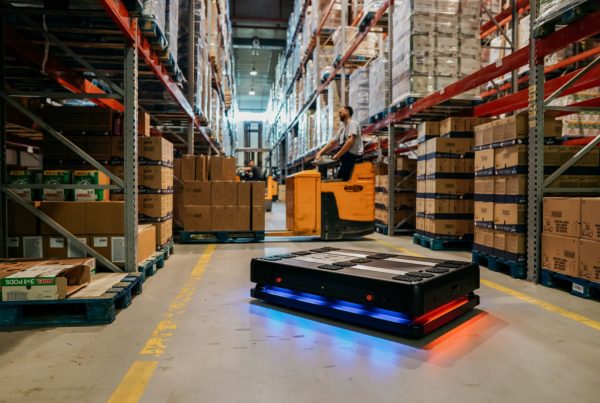
- Autonomous Mobile Robots (AMRs): Move goods between zones
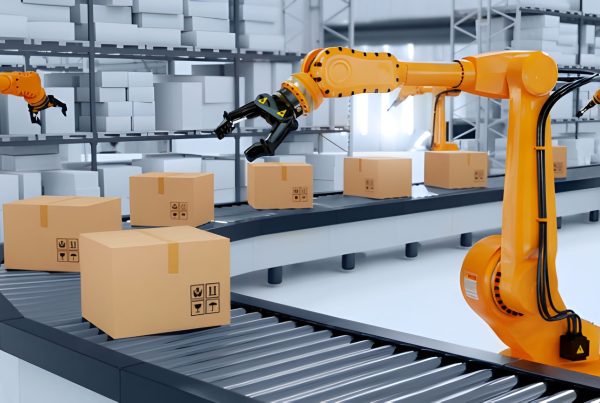
- Robotic arms: Handle packing and repetitive tasks
How They Differ from Manual Operations
In manual warehouses, workers depend on memory or handheld tools; errors increase with fatigue, and performance varies. Robots, however, follow structured workflows, validate each step digitally, and deliver consistent results regardless of volume or shift duration.
Why Order Accuracy Is a Critical Challenge
Order accuracy is a key business metric that directly impacts customer satisfaction, brand trust, and profitability.
What It Means
Delivering:
- The correct product
- In the correct quantity
- To the correct customer
- At the correct time
Even small errors disrupt the fulfillment chain.
Where Errors Occur
Common failure points in manual systems include:
- Mis-picks or wrong items
- Incorrect variants or sizes
- Missing items in multi-order shipments
- Packing and labeling mistakes
- Inventory mismatches
The Cost of Inaccuracy
Errors create ripple effects beyond returns:
- Higher reverse logistics costs
- Customer dissatisfaction and churn
- Lost repeat purchases
- Operational inefficiencies
- Brand damage
According to Deloitte, automation in supply chains can significantly reduce manual errors, especially in high-volume operations.
Even a 1–2% error rate can lead to significant losses for growing e-commerce businesses.
How Warehouse Robots Improve Order Accuracy
Warehouse robots create a scalable advantage by addressing the root causes of errors.
1. Precision-Driven Picking
Robotic systems follow optimized paths and digital instructions, eliminating guesswork. Each item is validated before picking, significantly reducing mis-picks, especially in large SKU environments.
2. Advanced Identification
Robots use multiple technologies:
- Barcode scanning
- RFID tracking
- AI-powered vision systems
This ensures precise product identification, even in dense storage setups.
3. Real-Time Validation
Every step is verified:
- Before picking
- During transport
- Before packing
This multi-layer validation catches errors early instead of after dispatch.
4. Elimination of Fatigue
Human workers naturally experience fatigue during long shifts, leading to slower processing and higher error rates. Robots maintain consistent accuracy throughout continuous operations.
5. Standardized Workflows
Robotics introduces structured processes where every task follows predefined logic. This minimizes variability and ensures predictable, scalable accuracy.
The Role of Robots in Inventory Accuracy
Accurate inventory is essential for accurate orders.
Real-Time Visibility
Robots continuously update inventory as they interact with products:
- Every movement is tracked
- Stock levels update instantly
- System-wide visibility improves
Reduced Discrepancies
Manual systems often face misplaced items and counting errors. Robotics maintains a digital record of every action, minimizing such issues.
Prevention of Stockouts and Overselling
Accurate data enables better planning, reduces overselling, and prevents stockouts—directly improving customer satisfaction.
Seamless Integration
Warehouse robots integrate with systems like WMS, ERP, and OMS, creating a unified ecosystem with seamless data flow. To understand how these systems drive efficiency and returns, explore the key features and ROI of a modern WMS.
Types of Robots That Improve Accuracy
Different robots enhance accuracy at different stages:
- Picking robots: Use AI vision to select the correct items and adapt to varying shapes
- Sorting robots: Ensure orders are routed to the correct shipping lanes
- AMRs: Move goods efficiently while reducing handling errors
- Robotic arms: Maintain consistent packing standards and reduce mislabeling
Manual vs Robot-Assisted Warehouses
Manual Warehouses
- High reliance on labor
- Increasing errors with volume
- Variable performance
- Limited real-time visibility
Robot-Assisted Warehouses
- Consistent accuracy
- Standardized workflows
- Real-time tracking and validation
- Scalable operations without compromising precision
Accuracy Comparison
Manual systems often struggle with consistency, while robot-assisted warehouses can achieve:
- 99%+ order accuracy
- Lower return rates
- Faster error resolution
Human + Robot Collaboration
Robots do not replace humans entirely. Instead, they make it easier for us by:
- handling repetitive, accuracy-critical tasks
- Humans manage supervision, exceptions, and strategy
This hybrid model delivers optimal results by combining precision with decision-making.
Future Trends in Warehouse Accuracy
The next evolution of robotics will further enhance accuracy:
- AI-driven decision-making: Dynamic workflow optimization
- Predictive error prevention: Identifying issues before they occur
- Smarter vision systems: Better recognition of complex items
- Greater accessibility: Affordable solutions for mid-sized businesses
Conclusion
Accuracy is no longer optional; it is essential. Manual processes alone cannot maintain consistency at scale.
Warehouse robots offer a reliable, scalable solution by:
- Eliminating common fulfillment errors
- Improving inventory visibility
- Ensuring consistent performance
- Supporting long-term growth
For modern fulfillment centers, robotics is not just about automation; it is about building a system that delivers precision, efficiency, and trust at every stage.
FAQs
Which robots improve order accuracy the most?
Picking robots, sorting robots, and AMRs are the most effective, as they address different stages where errors occur.
Do warehouse robots eliminate errors completely?
No system is entirely error-free, but robots significantly reduce error rates compared to manual processes.
How do robots integrate with existing systems?
They connect with WMS, ERP, and OMS platforms, enabling real-time data exchange and automation.
Are warehouse robots suitable for smaller businesses?
Yes. Modern robotic systems are modular and scalable, making them accessible for growing e-commerce operations.