
Why Order Processing Speed Matters in Ecommerce Fulfillment
Order processing speed is the backbone of modern ecommerce fulfillment.
As customer expectations for faster delivery rise, slow processing inside the warehouse becomes a critical bottleneck. It is no longer enough to ship orders quickly. They must be processed quickly first.
How processing speed impacts delivery performance
- Faster processing leads to earlier dispatch
- Earlier dispatch improves delivery timelines
- Faster delivery increases customer satisfaction
Even small delays at the sorting stage can push orders past shipping cutoffs. This creates a chain reaction that impacts the final delivery timeline.
The connection between throughput and fulfillment success
Warehouse throughput determines how many orders can be processed within a given time frame. Higher throughput means:
- More orders handled per hour
- Better utilization of resources
- Improved operational efficiency
Higher throughput also allows businesses to absorb sudden spikes in demand without disrupting workflows, which is critical in competitive ecommerce environments.
Why manual sorting slows everything down
Manual sorting introduces:
- Delays due to human decision-making
- Increased handling time per item
- Higher chances of errors
In high-volume environments, these inefficiencies quickly compound. This is where automated sortation systems become essential for maintaining speed and consistency.
What Are Automated Sortation Systems?
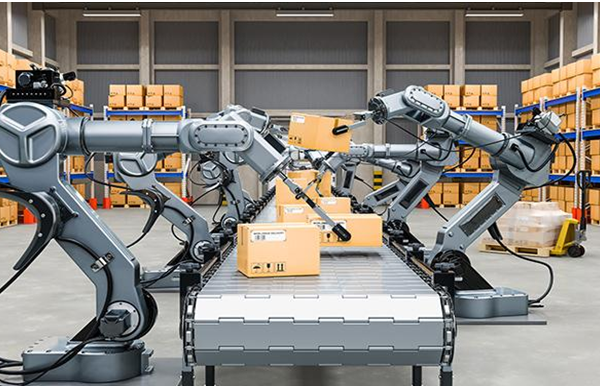
Automated sortation systems are technologies used to identify, categorize, and route items within a warehouse without manual intervention.
They act as the central routing engine of fulfillment operations.
How sortation systems work
- Items are scanned using barcodes or sensors
- Data is processed instantly
- Items are directed to the correct destination automatically
Common types of sortation systems
- Conveyor-based sortation
- Tilt-tray sorters
- Cross-belt sorters
- Shoe sorters
Each type is designed for different warehouse sizes and order volumes.
Manual vs automated sorting
| Manual Sorting | Automated Sortation |
| Slower and labor-intensive | Fast and system-driven |
| Higher error rates | High accuracy |
| Limited scalability | Easily scalable |
| Inconsistent output | Predictable performance |
How Automated Sortation Systems Increase Processing Speed
Speed is where automation delivers the most noticeable impact.
1. High-speed identification
Automated systems use:
- Barcode scanners
- RFID technology
- Vision systems
These tools identify items instantly, eliminating delays caused by manual checks.
2. Automated routing decisions
Once identified, items are routed automatically to:
- Specific orders
- Shipping zones
- Carrier lanes
This removes the need for human decision-making.
3. Continuous flow processing
Unlike manual systems that stop and start, automation ensures a continuous flow of goods.
With automated sortation systems, warehouses can:
- Process thousands of items per hour
- Reduce idle time
- Maintain consistent speed
4. Reduced handling time
Each touchpoint adds time. Automation minimizes these touchpoints, allowing items to move faster through the system.
Additionally, automated systems synchronize with upstream and downstream processes such as picking and packing. This alignment removes idle gaps and ensures smoother transitions across the fulfillment cycle.
Eliminating Bottlenecks in Order Fulfillment
Bottlenecks are one of the biggest challenges in high-volume warehouses.
How manual sorting creates congestion
- Workers struggle to keep up with the volume
- Items accumulate at sorting stations
- Processing becomes uneven
This leads to delays that affect the entire fulfillment process.
How automation solves this problem
Automated systems introduce:
- Smooth material flow
- Balanced workload distribution
- Consistent processing speed
Conveyors and automated diverters play a key role in maintaining this flow.
Handling peak demand efficiently
During peak seasons or promotions, order volumes surge.
Automated sortation systems handle these spikes by:
- Maintaining throughput levels
- Preventing queue buildup
- Ensuring timely processing
This consistency reduces operational stress and helps teams maintain performance without over-reliance on temporary labor.
Accuracy Improvements That Reduce Rework and Delays
Speed without accuracy can create bigger problems.
The impact of sorting errors
- Incorrect routing
- Delayed shipments
- Increased reprocessing
Errors not only slow down operations but also increase costs.
How automation improves accuracy
Automation uses:
- Multi-level scanning
- Sensor-based validation
- Real-time system checks
These mechanisms ensure items are sorted correctly the first time and help to maintain fulfillment accuracy.
Faster first-pass success
With automated sortation systems, warehouses achieve:
- Higher accuracy rates
- Fewer returns and re-shipments
- Faster dispatch timelines
Improved accuracy also enhances customer trust, as orders are delivered correctly and on time, reducing complaints and support requests.
Scalability Benefits of Automated Sortation Systems
Scalability is essential for growing ecommerce operations.
Handling growth without increasing labor
Automation allows warehouses to process more orders without adding additional labor.
This leads to:
- Lower operational costs
- Better resource utilization
- Improved margins
Adapting to seasonal demand
Order volumes can fluctuate significantly.
Automated systems provide:
- Flexibility to handle spikes
- Consistent performance during peak periods
- Faster recovery after demand surges
Supporting long-term growth
Investing in automated sortation systems helps build a future-ready warehouse.
It ensures:
- Sustainable scaling
- Improved operational resilience
- Better customer experience
Many businesses adopting warehouse automation are seeing measurable gains in both efficiency and delivery performance.
Conclusion
Order processing speed is critical for modern ecommerce success.
Automated sortation systems play a central role in improving this speed by:
- Eliminating manual delays
- Increasing throughput
- Enhancing accuracy
They create a seamless flow of operations, ensuring faster order handling and dispatch.
For high-volume warehouses, sortation automation is not just an upgrade. It is a necessity for staying competitive and meeting growing customer expectations.
FAQs
How fast can automated sortation systems process orders?
Depending on the system type, they can process thousands to tens of thousands of items per hour.
Can automated sortation systems integrate with existing warehouses?
Yes. Most systems are designed to integrate with existing warehouse management systems and infrastructure.
Are automated sortation systems suitable for mid-sized ecommerce businesses?
Yes. Scalable solutions are available for both mid-sized and large operations.
How do sortation systems maintain speed during peak demand?
They use continuous flow processing and automated routing to maintain consistent throughput, even during high order volumes.