
Why Delivery Time Is a Critical Metric in Ecommerce Fulfillment
Faster delivery is no longer a competitive edge. It is the expectation.
Customers today do not just track orders. They anticipate them. A delay of even a single day can impact trust, brand perception, and future purchase decisions.
Why speed directly impacts revenue
- Faster delivery increases customer satisfaction
- Satisfied customers are more likely to reorder
- Delays lead to cancellations, returns, and negative reviews
Beyond customer experience, delivery speed also influences operational efficiency. Faster dispatch cycles reduce warehouse congestion and improve inventory turnover. This creates a ripple effect across the entire supply chain.
Where most delays actually happen
Many assume delays occur during shipping. In reality, a large portion of delays originates inside the warehouse, especially during sorting.
Sorting is the bridge between order processing and dispatch. If this step slows down, everything downstream suffers.
The hidden problem: missed shipping cutoffs
Manual sorting often causes:
- Late order routing
- Queue buildup near dispatch zones
- Missed carrier pickup windows
Once a cutoff is missed, delivery timelines shift instantly.
This is where automated sortation systems transform operations by ensuring speed, accuracy, and consistency.
What Is Sorting Automation in Warehouses?
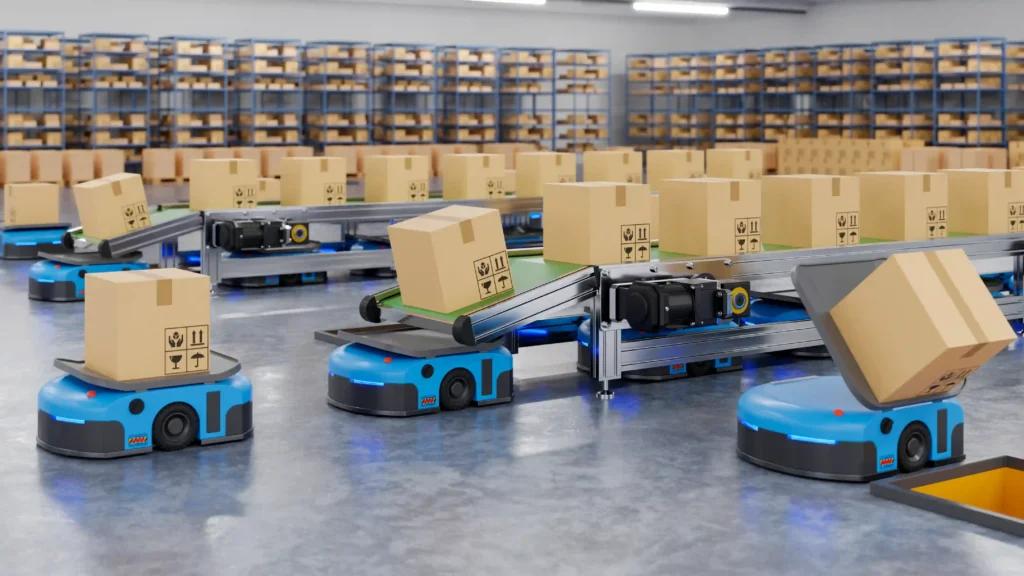
Sorting automation is the process of using technology to identify, categorize, and route items without manual intervention.
Instead of workers deciding where each package goes, systems handle everything in real time.
How automated sorting works
- Packages are scanned instantly
- Data is processed in milliseconds
- Items are routed to predefined destinations
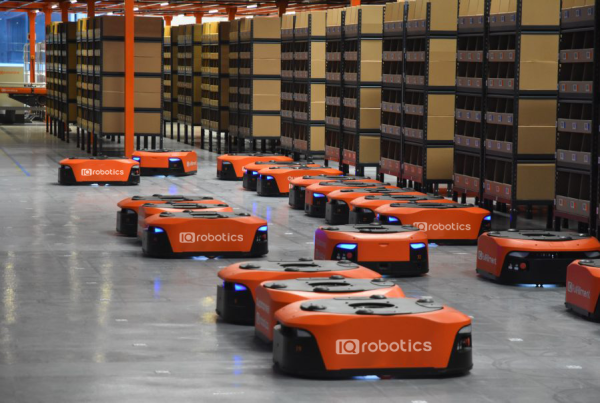
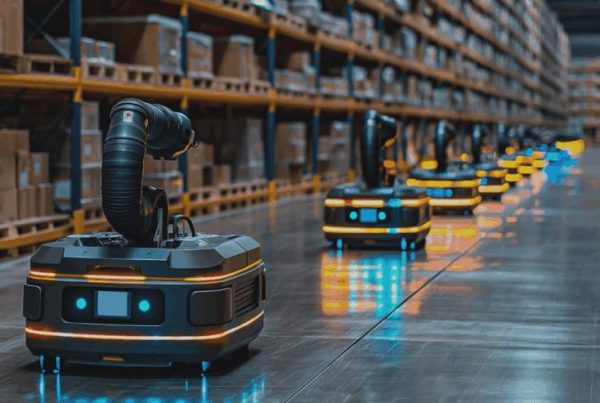
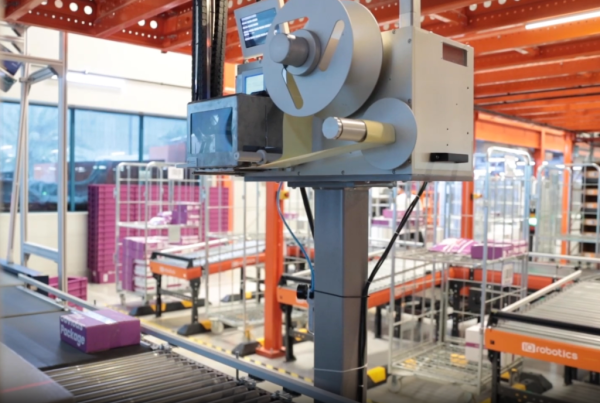
At the core of this process are automated sortation systems, combining conveyors, scanners, sensors, and intelligent software.
Manual vs automated sorting
| Manual Sorting | Automated Sorting |
| Human decision-making | System-driven routing |
| Slower processing | High-speed execution |
| Higher error rates | Near-zero errors |
| Inconsistent output | Predictable performance |
Where it is used
- Carrier-based sorting
- Zone-based distribution
- Batch order grouping
- Reverse logistics handling
Modern solutions from companies with advanced robotics integrate sorting with broader warehouse systems, creating a seamless fulfillment pipeline.
How Sorting Automation Accelerates Order Routing
Speed in fulfillment depends heavily on how quickly orders are routed.
Instant identification and classification
Automated systems use:
- Barcode scanning
- RFID technology
- Vision-based recognition
This allows packages to be identified instantly without manual checks.
Real-time routing decisions
Once identified, each order is automatically assigned to:
- The correct shipping carrier
- Delivery zones
- Priority lanes
No pauses. No manual decisions.
Continuous high-speed movement
Orders move through conveyors and sorters without stopping. This ensures:
- Faster processing per order
- Reduced idle time
- Higher throughput
With automated sortation systems, warehouses can process thousands of orders per hour with consistent accuracy.
Fewer touchpoints = faster flow
Every manual handoff slows things down. Automation removes these unnecessary steps, allowing orders to move faster from picking to dispatch.
Additionally, automation enables better synchronization between picking, packing, and shipping stages. This alignment reduces idle gaps between processes and creates a more cohesive workflow.
Reducing Bottlenecks That Delay Shipments
Bottlenecks are the biggest enemy of fast fulfillment.
Why manual sorting creates congestion
- Workers cannot match the peak demand speed
- Orders pile up at sorting stations
- Processing becomes inconsistent
This leads to delays that ripple across the entire operation.
How automation keeps everything moving
Automation introduces a continuous flow system where:
- Orders never stop moving
- Queues are minimized
- Processing remains stable
Handling peak demand without slowdown
During sales events or holidays, order volumes spike. Manual systems struggle. Automated systems scale.
Automated sortation systems maintain consistent throughput, ensuring:
- No backlog accumulation
- No sudden slowdowns
- Reliable dispatch timelines
This scalability is especially valuable for growing ecommerce businesses that experience unpredictable demand patterns.
Improving Accuracy to Prevent Rework and Reshipping
Speed means nothing without accuracy.
A single sorting error can delay delivery by days.
The cost of mis-sorted orders
- Orders sent to the wrong locations
- Need for reprocessing
- Increased shipping costs
- Customer dissatisfaction
How automation eliminates errors
Automation uses:
- Multi-point scanning
- Sensor-based validation
- Real-time error detection
If an issue occurs, the system corrects it instantly.
First-time right deliveries
With automated sortation systems, warehouses achieve:
- Higher accuracy rates
- Fewer returns and re-shipments
- Faster delivery timelines
Higher accuracy also reduces operational stress on warehouse teams, allowing them to focus on higher-value tasks instead of fixing avoidable errors.
Impact of Sorting Automation on Last-Mile Delivery Speed
Sorting efficiency directly impacts delivery performance.
Faster dispatch to carriers
When sorting is faster:
- Orders reach dispatch areas sooner
- Carrier pickups are met consistently
- No delays in handoff
Improved on-time departure rates
Warehouses can maintain strict shipping schedules, which is critical for:
- Same-day delivery
- Next-day delivery
Supporting modern delivery expectations
Today’s fulfillment models demand speed and precision.
Businesses exploring solutions from robotics companies in Dubai are increasingly adopting automation to meet rising ecommerce demand and stay competitive globally.
From the warehouse to the doorstep faster
With automated sortation systems, the entire chain becomes more efficient, reducing delays from processing to final delivery.
In many cases, faster sorting also enables better route planning for carriers, further improving delivery predictability and customer satisfaction.
Conclusion
Delivery speed is no longer optional. It is a core business driver.
Sorting automation plays a direct role in reducing delivery timelines by:
- Eliminating manual delays
- Improving routing speed
- Reducing errors and rework
Automated sortation systems ensure faster, smoother, and more reliable fulfillment operations.
For ecommerce businesses aiming to scale, improve customer satisfaction, and stay competitive, investing in sorting automation is a strategic move, not just an operational upgrade.
FAQs
How does sorting automation differ from picking automation?
Picking automation focuses on selecting items from storage. Sorting automation handles routing after picking. Both are critical but serve different roles.
Can sorting automation reduce delays during peak seasons?
Yes. Automated systems maintain consistent performance even during high order volumes, preventing bottlenecks.
Is sorting automation suitable for mid-sized warehouses?
Absolutely. Many solutions are scalable and designed specifically for growing operations.
How quickly can results be seen after implementation?
Most warehouses experience improvements within weeks, including faster processing, fewer errors, and better delivery timelines.