
Why Fulfillment Becomes a Bottleneck During Rapid Ecommerce Growth
Rapid growth feels like success. But behind the scenes, it often exposes operational cracks.
Many ecommerce brands scale their marketing and sales faster than their fulfillment systems. What worked at 50 orders a day starts breaking at 500.
The pressure of increasing order volume
As order volumes grow:
- Processing time increases
- Warehouse congestion rises
- Error rates start climbing
Without the right systems, fulfillment teams struggle to keep up. Even small inefficiencies get amplified at scale.
The lag between growth and operations
Marketing campaigns can scale instantly. Fulfillment cannot.
Brands often invest heavily in acquisition but delay operational upgrades. This creates a gap where demand outpaces capability.
The impact on customer experience
Poor fulfillment leads to:
- Late deliveries
- Incorrect orders
- Negative reviews
Customer trust drops quickly when fulfillment fails. Over time, this directly affects retention and lifetime value.
This is why many scaling brands start investing early in logistics management software to maintain visibility, control, and consistency across operations.
Order Accuracy and Error Management Challenges
As order volume increases, maintaining accuracy becomes harder.
Why errors increase with scale
Manual processes depend heavily on human performance. Under pressure:
- Workers rush to meet targets
- Fatigue sets in
- Quality checks are skipped
Common fulfillment errors
- Wrong product shipped
- Incorrect quantities
- Missing or damaged items
The hidden cost of errors
Errors create a chain reaction:
- Returns and refunds increase
- Re-shipments add extra cost
- Customer support workload rises
Over time, these costs eat into margins and reduce operational efficiency.
To combat this, many brands implement logistics management software that enables barcode tracking, validation checkpoints, and standardized workflows.
Scalability Limitations of Manual Fulfillment Operations
Manual fulfillment may work in the early stages. But it does not scale efficiently.
Dependence on labor
Scaling manually requires:
- Hiring more workers
- Extending working hours
- Increasing supervision
This approach is expensive and difficult to manage.
Hiring and training challenges
- Recruitment takes time
- Training impacts productivity
- Workforce consistency is hard to maintain
High turnover further complicates operations.
Why manual systems break at scale
Manual workflows lack:
- Process standardization
- Speed consistency
- Real-time performance tracking
This leads to inefficiencies and unpredictable output.
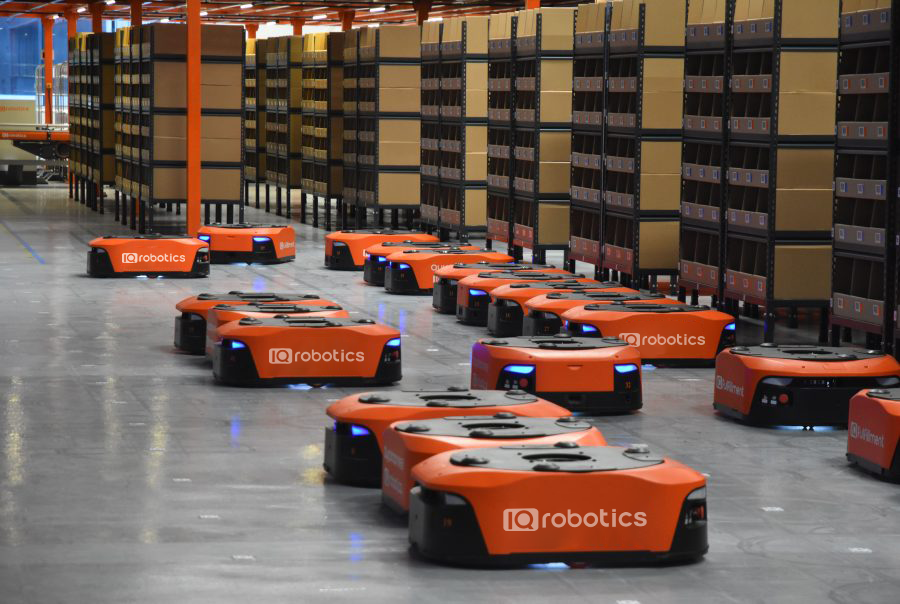
Many businesses begin transitioning to automation with providers like IQ Robotics while integrating logistics management software to manage workflows more effectively.
Inventory Visibility and Stock Management Issues
Inventory becomes harder to control as operations expand.
Lack of real-time visibility
Without centralized systems:
- Inventory updates lag behind actual stock
- Teams operate on outdated data
- Decisions become reactive instead of proactive
Common inventory challenges
- Overselling due to inaccurate stock data
- Stockouts during peak demand
- Delayed replenishment cycles
Managing multi-location inventory
As brands grow, inventory is often spread across:
- Multiple warehouses
- Third-party logistics providers
- Regional fulfillment centers
Without proper tracking, this creates confusion and inefficiencies.
Modern logistics management software centralizes inventory data, enabling better forecasting, planning, and decision-making.
Delays in Order Processing and Shipping
Speed is one of the first areas to suffer during rapid growth.
Why processing delays happen
- Increased order backlog
- Limited warehouse capacity
- Bottlenecks in picking and sorting
Missed shipping cutoffs
If orders are not processed on time:
- Carrier pickups are missed
- Delivery timelines extend
- Customer dissatisfaction increases
The ripple effect on delivery
Delays inside the warehouse impact the entire supply chain. Even efficient carriers cannot compensate for late dispatch.
This is why many brands start exploring solutions from automation companies to improve internal efficiency and reduce processing time.
Using logistics management software, businesses can prioritize urgent orders, streamline workflows, and maintain consistent dispatch schedules.
Additionally, faster internal processing allows brands to offer more competitive delivery promises, which can directly improve conversion rates on product pages.
Rising Fulfillment Costs and Operational Complexity
Growth often leads to increased complexity and rising costs.
Increasing operational expenses
As volume grows:
- Labor costs increase
- Warehouse space requirements expand
- Equipment and infrastructure costs rise
Inefficiencies in manual workflows
Manual systems lead to:
- Rework due to errors
- Time wasted in coordination
- Poor utilization of resources
Balancing speed, cost, and accuracy
This is one of the toughest challenges for growing brands.
- Faster delivery often increases cost
- Lower cost may reduce service quality
- High accuracy may slow down operations
The key is optimization, not just expansion.
This is where logistics management software helps by:
- Improving workflow visibility
- Reducing redundant tasks
- Optimizing resource allocation
Over time, this leads to better cost control without compromising performance.
Conclusion
Fast-growing ecommerce brands face fulfillment challenges that intensify with scale.
What begins as small inefficiencies quickly becomes major operational bottlenecks.
Manual systems struggle to maintain:
- Accuracy
- Speed
- Operational control
The solution lies in early intervention.
By adopting smarter systems, improving workflows, and leveraging automation, brands can build a fulfillment operation that supports long-term growth.
Investing in logistics management software and automation is not just about solving current problems. It is about preparing for future scale and creating a resilient, high-performance fulfillment ecosystem.
FAQs
What is the biggest fulfillment challenge for fast-growing ecommerce brands?
Maintaining speed and accuracy simultaneously while managing increasing order volumes is the biggest challenge.
When should an ecommerce brand upgrade its fulfillment operations?
When order growth starts causing delays, errors, or operational inefficiencies, it is time to upgrade systems.
How does automation help solve fulfillment problems?
Automation reduces dependency on manual processes, improves speed, and increases accuracy across operations.
Can small fulfillment teams handle rapid ecommerce growth effectively?
Only to a certain extent. Without proper systems and tools, small teams struggle to maintain efficiency as demand increases.